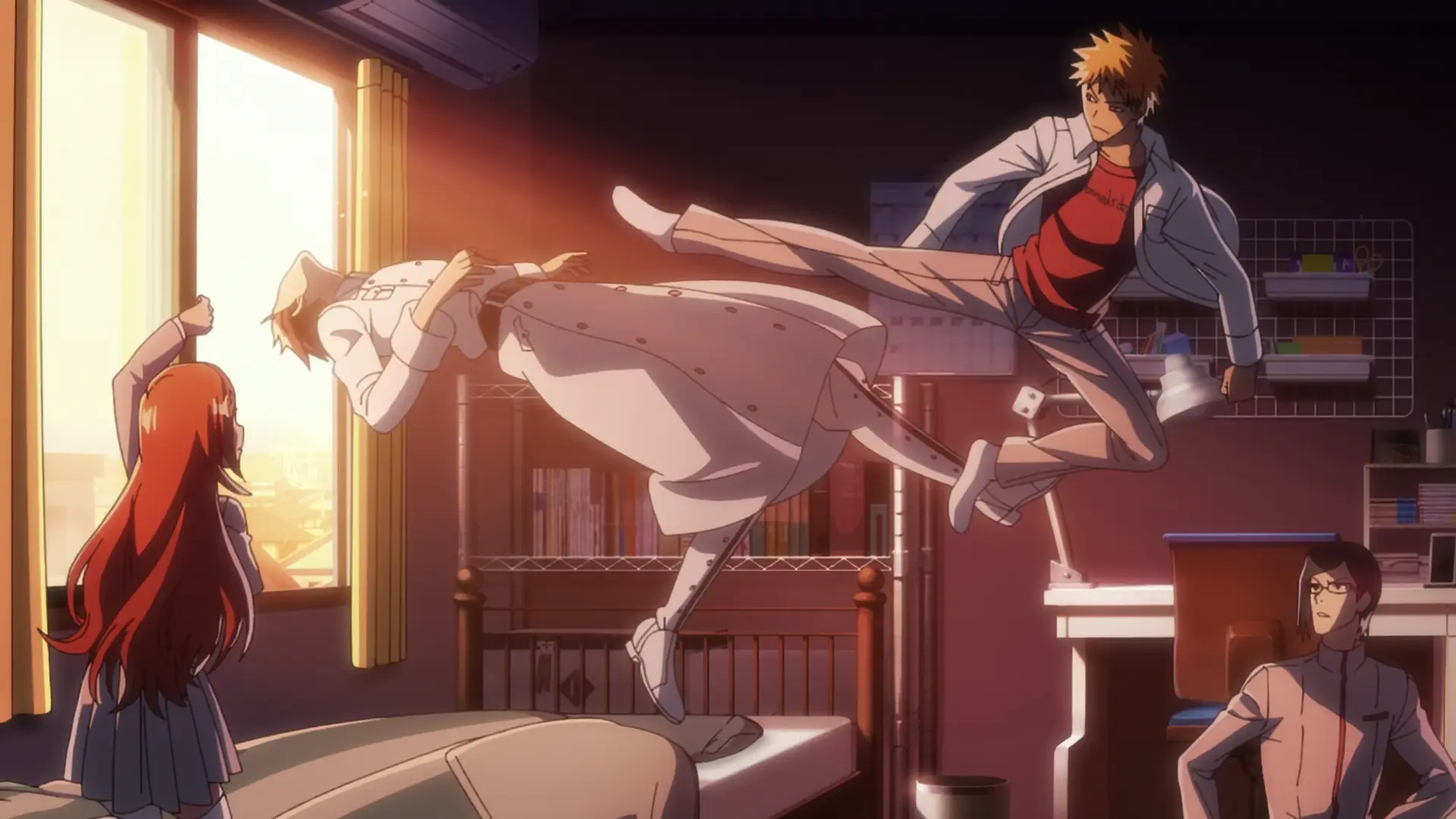
Bleach isn’t about heroes or villains but the battles within. Aizen’s loneliness and Ichigo’s struggle with power demonstrate that Kubo’s characters are their own greatest enemies. Let’s talk about Bleach’s duality!
Power in Bleach isn’t just about wielding a Zanpakutō or achieving the next transformation. It’s about confronting contradictions within. Tite Kubo crafts characters who are constantly in internal conflict, where their greatest enemy is often themselves. Bleach thrives on these paradoxes, turning internal struggles into the foundation of legendary storytelling.
Heroes who fight their darkness. Villains who seek something just out of reach. Warriors who mask pain with strength. In Bleach, duality isn’t a weakness. It makes these characters unforgettable.
Ichigo Kurosaki – The Hero Who Harbored a Monster

Duality: Guardian vs. Destroyer
Ichigo’s struggle isn’t just Shinigami vs. Hollow. It’s humanity vs. power. His Hollow form isn’t an external curse but an intrinsic part of him. He doesn’t defeat it; he accepts it. His journey is about learning that rage and compassion can coexist, and true strength comes from balancing both.
Defining Moment: His battle with Ulquiorra, where he transforms into a mindless beast yet still shields Orihime. He’s a monster who never stopped protecting.
Sosuke Aizen – The Villain Who Hated Solitude

Duality: Genius vs. Loneliness
Aizen’s god complex isn’t about superiority. It’s about isolation. His Kyoka Suigetsu isn’t just a weapon; it’s a wall, keeping the world at a distance. He could deceive anyone, yet no one truly saw him. His end isn’t a downfall…it’s a revelation that, even as a “god,” he was alone.
Defining Moment: Laughing in defeat, finally exposed by a human’s strength…Ichigo, the one who never needed to see through illusions.
Unohana Retsu – The Healer Who Craved Bloodshed

Duality: Mercy vs. Carnage
The Soul Society’s most merciful healer was once its most brutal killer. Unohana didn’t just restrain herself—she buried her true self beneath a facade of serenity. But the battle with Kenpachi isn’t about victory; it’s about unleashing the beast she had caged for centuries.
Defining Moment: Smiling in death as Kenpachi strikes her down because she fought without holding back for the first time in ages.
Ulquiorra Cifer – The Hollow Who Questioned Existence

Duality: Nihilism vs. Curiosity
Emotionless. Cold. A walking void. Yet Ulquiorra wasn’t indifferent—he was curious. Orihime’s kindness doesn’t just confuse him. It challenges everything he believes. His famous “What is a heart?” isn’t mockery; it’s a desperate, final grasp at meaning.
Defining Moment: Disintegrating into ash, reaching out for the “heart” he never understood—one last attempt to connect before oblivion.
Byakuya Kuchiki – The Noble Who Chose Love Over Law

Duality: Duty vs. Love
Byakuya’s mask of nobility is built on guilt and grief. His loyalty to the law is a way to atone for Hisana’s death. But when Ichigo forces him to choose between Rukia’s life and the law, he realizes that honor means nothing without humanity.
Defining Moment: Whispering “I’m sorry, Rukia” as his sword shatters—a noble’s heart finally exposed.
Orihime Inoue – The Pacifist Who Defied Gods

Duality: Kindness vs. Power
Orihime isn’t weak…she is unyielding. Her refusal to fight is a conscious choice, not cowardice. With reality-warping powers at her disposal, she could change the world through force… but she chooses love, compassion, and faith instead.
Defining Moment: Standing firm as Ulquiorra’s Lanza del Relámpago nears, her belief unshaken—because protecting others isn’t about violence.
Kisuke Urahara – The Genius Who Played with Fate

Duality: Chaos vs. Calculation
A clown. A scientist. A mastermind who hides behind jokes. Urahara isn’t just a thinker. He’s a planner who carries the weight of his past mistakes. He acts carefree, but every move is deliberate, every gambit calculated centuries in advance.
Defining Moment: Casually revealing he orchestrated Yhwach’s downfall long before the battle even began…playing 4D chess with fate itself.
Yhwach – The Tyrant Who Feared Mortality

Duality: Creation vs. Destruction
The Quincy king sought absolute power not to rule—but to erase death itself. His “Almighty” ability wasn’t about control; it was about eliminating uncertainty, the fear of weakness, the inevitability of an end. But in the end, he couldn’t outrun fate.
Defining Moment: Dying as a powerless infant, his duality exposed—no longer a god, just a man.
Kenpachi Zaraki – The Berserker Who Learned to Feel

Duality: Violence vs. Honor
Kenpachi fights for one reason: to feel alive. But beneath the bloodlust is something deeper. It’s an understanding that battle is his language and connection to the world. His bond with Yachiru, a literal manifestation of his repressed power, proves he’s not just a killer… but a man searching for meaning.
Defining Moment: Roaring “I AM KENPACHI!” as he cuts down Nnoitra, cradling Yachiru, revealing the heart behind the brutality.
Rukia Kuchiki – The Outcast Who Became a Queen

Duality: Strength vs. Vulnerability
Rukia’s arc isn’t about gaining strength. It’s about belonging. A noble raised as an outsider, a soldier who feared her worth, a death god with a fragile heart. Her rise to captain isn’t a victory of power—it’s proof that vulnerability and leadership can coexist.
Defining Moment: Standing as a captain, proving that even those who start as outcasts can rewrite the rules of power.
Shinji Hirako – The Masked Leader Who Reversed Perceptions
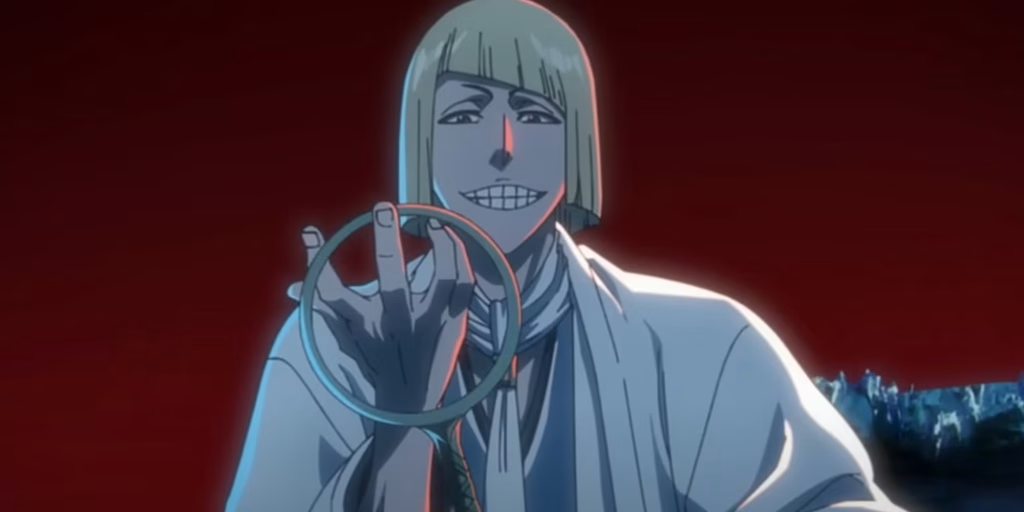
Duality: Sarcasm vs. Insight
Shinji, the sly Vizard leader, sees the world differently…literally. His Shikai, Sakanade, inverts opponents’ senses, mirroring his ability to see through the deception. But beneath his sarcasm is a strategist who’s fought both as an outcast and a protector.
Defining Moment: In the Thousand-Year Blood War, his Bankai, Sakashima Yokoshima Happōfusagari, reverses enemy alliances. It’s a poetic reflection of his role as a leader who unites outcasts.
Talk Out Daily Final Thoughts
It’s essential to understand why the power of contradictions matters. Kubo’s greatest strength isn’t in power-ups. It’s in paradoxes. His characters don’t just battle enemies; they battle themselves. Each one carries its own contradictions, and it grows in embracing these inner conflicts.
Good and evil often feel like clear-cut lines. However, bleach paints in shades of the soul, frequently reminding us that true strength isn’t about suppressing our dual nature…
It’s about learning to live with it.




Leave a Reply